· Richard Shuker · Finance & growth · 6 min read
The deal you’re not planning yet
Twelve corporate transactions over 26 years, and why deal experience belongs in your boardroom long before a deal is on the table.
When I talk to MSP owners about what a board advisor brings, M&A experience usually gets a polite nod and a quick “we’re not looking to buy or sell”. That’s fair. Most £1m–£5m MSPs aren’t, at least not this year.
Neither were we, most of the time. Yet over 26 years at Technology Means Business (TMB), I was involved in 15 corporate transactions. Some were planned for years. Others turned up because of someone else’s circumstances: a business in administration, a company in liquidation, a firm that needed a buyer before it went under, a director who wanted out. The common thread was that when the moment came, it came quickly, and the businesses that did well were the ones already in shape to act.
This article sets out how I count those transactions, and why that experience matters in your boardroom long before a deal is on the table.
How I count them
Fifteen is the honest total, but I count twelve. The other three were steps within a larger deal rather than deals in their own right.
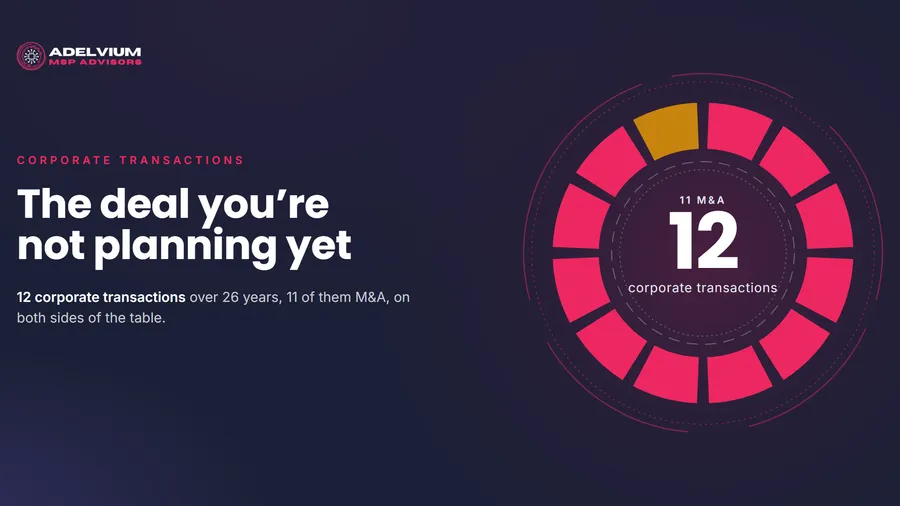
Of the twelve, 11 were M&A, on both sides of the table: acquisitions, including our own management buy-out in 2011, demergers, and the sale of TMB in 2024, my exit. The twelfth was a share buyback from a departing director. It isn’t M&A, but negotiating a shareholder’s exit on fair terms is one of the most common, and most emotional, transactions an owner-managed business faces.
They came in most shapes: whole companies and customer contracts, staff transferring under TUPE, and distressed purchases where someone else sets the timetable and nobody is going to give you warranties.
I also sat in two different seats. The first five I was involved in and implemented on behalf of TMB’s owners, as part of the senior leadership team and later as a director. In the earliest I had little part in the deal-making, but I handled the integration and made each deal work after it completed. The rest I did as an owner-director, from our own MBO to the sale of the business. Implementing a deal for the owners and deciding on one as an owner feel very different. Both are useful when I sit with an owner and their leadership team today.
Most deals aren’t on this year’s plan
Looking back, most of those opportunities weren’t the result of a long-planned acquisition strategy. A competitor’s difficulty, a supplier’s failure or a shareholder’s change of plans created them.
That’s typical of the MSP market. Owners retire. Businesses run out of cash. Vendors consolidate. A peer you’ve known for years rings and asks whether you’d be interested in their client base. When that call comes, there’s rarely time to learn how acquisitions work from scratch, and a distressed sale can be decided in days rather than months.
So the right question isn’t “are we planning an acquisition?” It’s “if the right opportunity turned up next month, would we be ready, and would we know whether to say no?”
Deal-ready is just well-run
What I find most useful about deal experience is that it changes how you run the business when no deal is in sight. A buyer, an investor or a lender will look at the same things a good board should be looking at anyway:
- Recurring revenue quality. How much is contracted, on what terms, and how concentrated is it in a handful of clients?
- Margin by service line. Not just overall profit, but which parts of the business actually earn it.
- Owner dependence. Could the business run for three months without you? If not, that’s a risk to your valuation and to you.
- Contracts. Do your client contracts survive a change of ownership? Do your supplier agreements?
- People and paperwork. Employment contracts, a shareholders’ agreement that deals with leavers fairly, and documented processes that someone else could follow.
- Clean numbers. Management accounts you trust, produced on time, that tell you where the business is heading.
Every item on that list makes your MSP more valuable and easier to run. That’s why I’ll keep coming back to them in a board meeting, whether or not you ever intend to sell. If you want to stay a lifestyle business, the same work makes it a better lifestyle business. If you change your mind in five years, you’ll be ready.
When the opportunity does arrive
When a deal is live, the value of someone who has been through it before is mostly in the questions they ask early:
- What is it really worth to us? Not the multiple you read about, but what those clients, contracts and people are worth inside your business, after integration costs and the clients you’ll inevitably lose.
- What are we actually taking on? With a share purchase you inherit the history. With TUPE you inherit employment terms. From an administrator you inherit very little protection.
- What can’t we see? Due diligence finds what’s written down. Experience tells you where to look for what isn’t.
- What will the other side look for in us? Whether you’re buying, selling or bringing in investment, preparing for their questions is half the negotiation.
- Should we walk away? Some of the most valuable advice I can give is about the acquisition that shouldn’t happen.
A board advisor doesn’t replace your lawyer, your accountant or a corporate finance advisor. A good one makes you a much better client of them: clearer on what you want, quicker to spot what matters, and less likely to pay for advice you didn’t need.
Advice, not a transaction fee
One last point, because it’s the first objection I usually hear: “a board advisor will push me towards an exit”. I won’t. I’m not a broker and I don’t take a success fee. Some of my clients are building to sell; most aren’t. My job is to help you reach your goals, and sometimes the best transaction is the one you decide not to do.
What I can offer is twelve corporate transactions of experience in your boardroom, so when the opportunity arrives, whether that’s next month or in ten years, you’re ready to make the call.
If a deal might be in your future, or you’d like to know your MSP would be ready if one turned up, let’s talk. Book a discovery call and we’ll start with where you are today.